BMI Calculator — Free, Instant & Accurate
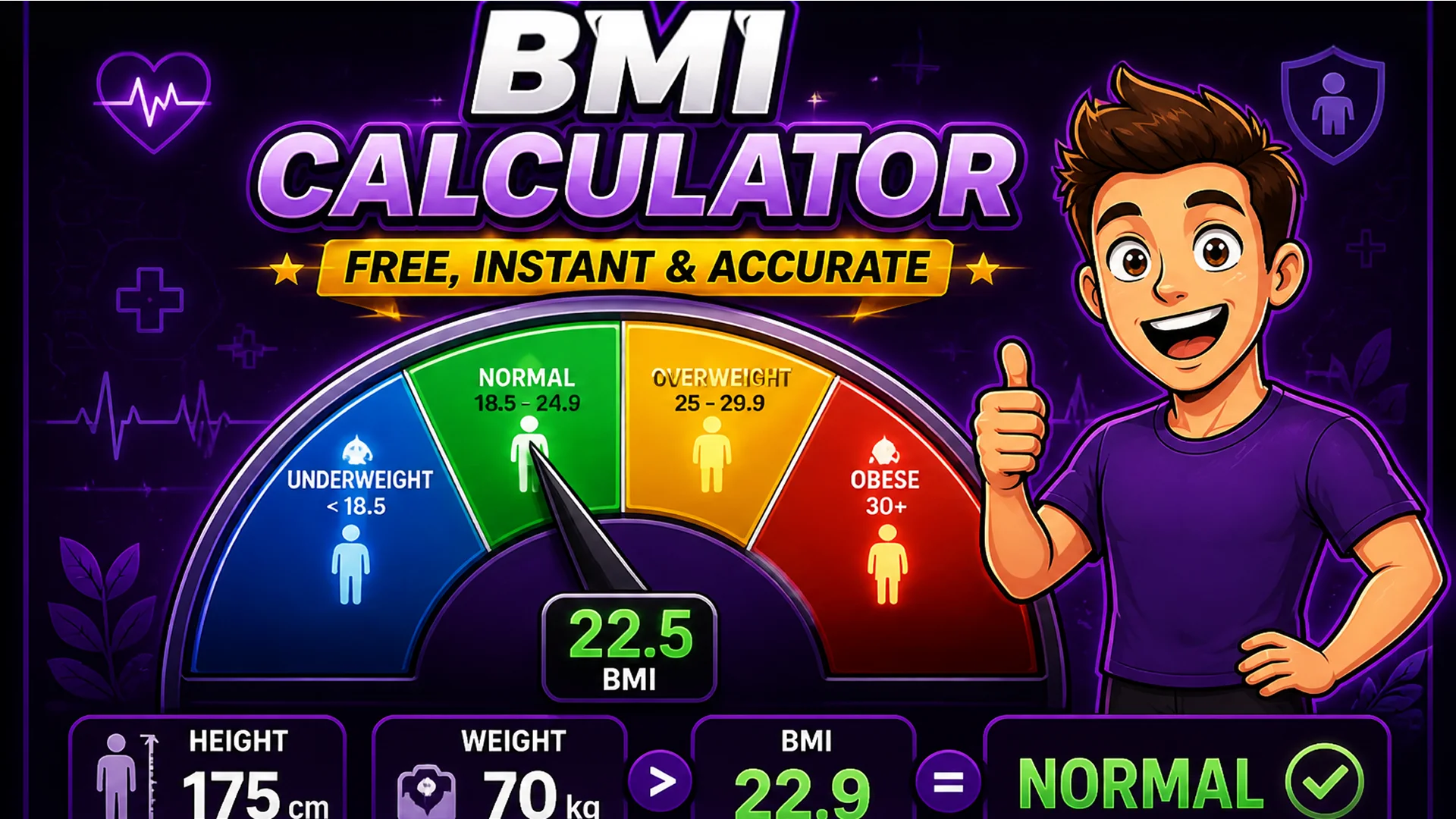
Calculate your Body Mass Index (BMI) instantly using metric or imperial units. Understand what your BMI means and see your category: underweight, normal, overweight, or obese.
Calculate Your BMI in Seconds — What It Means for Your Health
Body Mass Index (BMI) is the most widely used screening tool for assessing whether an adult's body weight is in a healthy range relative to their height. It is used by healthcare providers, public health researchers, insurance providers, and fitness professionals as a quick, standardized measure of weight status. Understanding your BMI is one of the most basic steps in monitoring your health.
The Toolsnests BMI Calculator computes your BMI instantly in either metric (kilograms and centimeters) or imperial (pounds and inches) units, shows your BMI category, and explains what the result means in practical terms.
What Is BMI and How Is It Calculated?
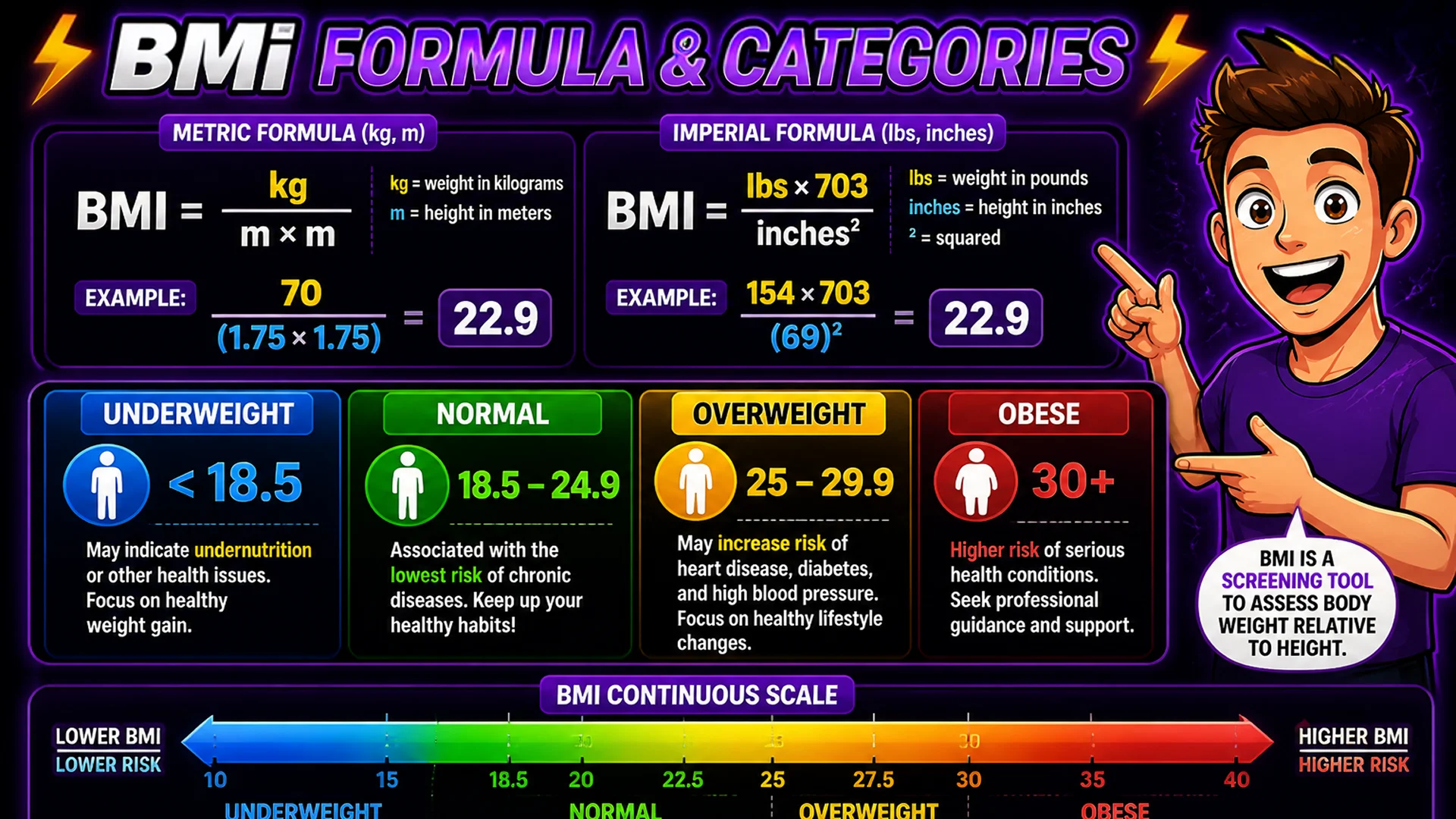
BMI is calculated by dividing weight in kilograms by the square of height in meters: BMI = weight(kg) / height(m)². For imperial units, the formula is: BMI = (weight(lbs) x 703) / height(inches)². The result is a dimensionless number — typically between 15 and 40 for most adults — that falls into one of four standard categories defined by the World Health Organization.
The four WHO BMI categories for adults are: Underweight (BMI below 18.5), Normal weight (BMI 18.5–24.9), Overweight (BMI 25.0–29.9), and Obese (BMI 30.0 and above). The Obese category is further subdivided into Class I (30.0–34.9), Class II (35.0–39.9), and Class III (40.0 and above).
How to Calculate Your BMI on Toolsnests
Open the BMI Calculator — no login, no installation.
Step 1: Select metric or imperial units. Step 2: Enter your weight (kilograms or pounds). Step 3: Enter your height (centimeters, or feet and inches separately for imperial). Step 4: Your BMI is calculated instantly and displayed with your category (underweight, normal, overweight, or obese). The calculator also shows the weight range that would put you in the Normal BMI category for your height, giving you a practical target reference.
Important Limitations of BMI
BMI is a useful population-level screening tool, but it has important limitations for individual assessment. BMI does not distinguish between fat mass and muscle mass — a very muscular athlete may have a BMI in the Overweight range despite having very low body fat. BMI does not account for fat distribution — abdominal fat (belly fat) is more associated with cardiovascular disease risk than fat distributed in the legs or arms, but BMI does not differentiate.
BMI is not appropriate as the sole health assessment for children and teenagers (pediatric BMI uses age- and sex-specific percentiles), elderly adults (age-related muscle loss means BMI may underestimate health risk), pregnant women, or individuals from certain ethnic groups where the BMI cutoffs for health risk differ from the WHO standards. Use BMI as a starting point for a health conversation with a healthcare provider, not as a definitive health verdict.

BMI and Related Health Metrics
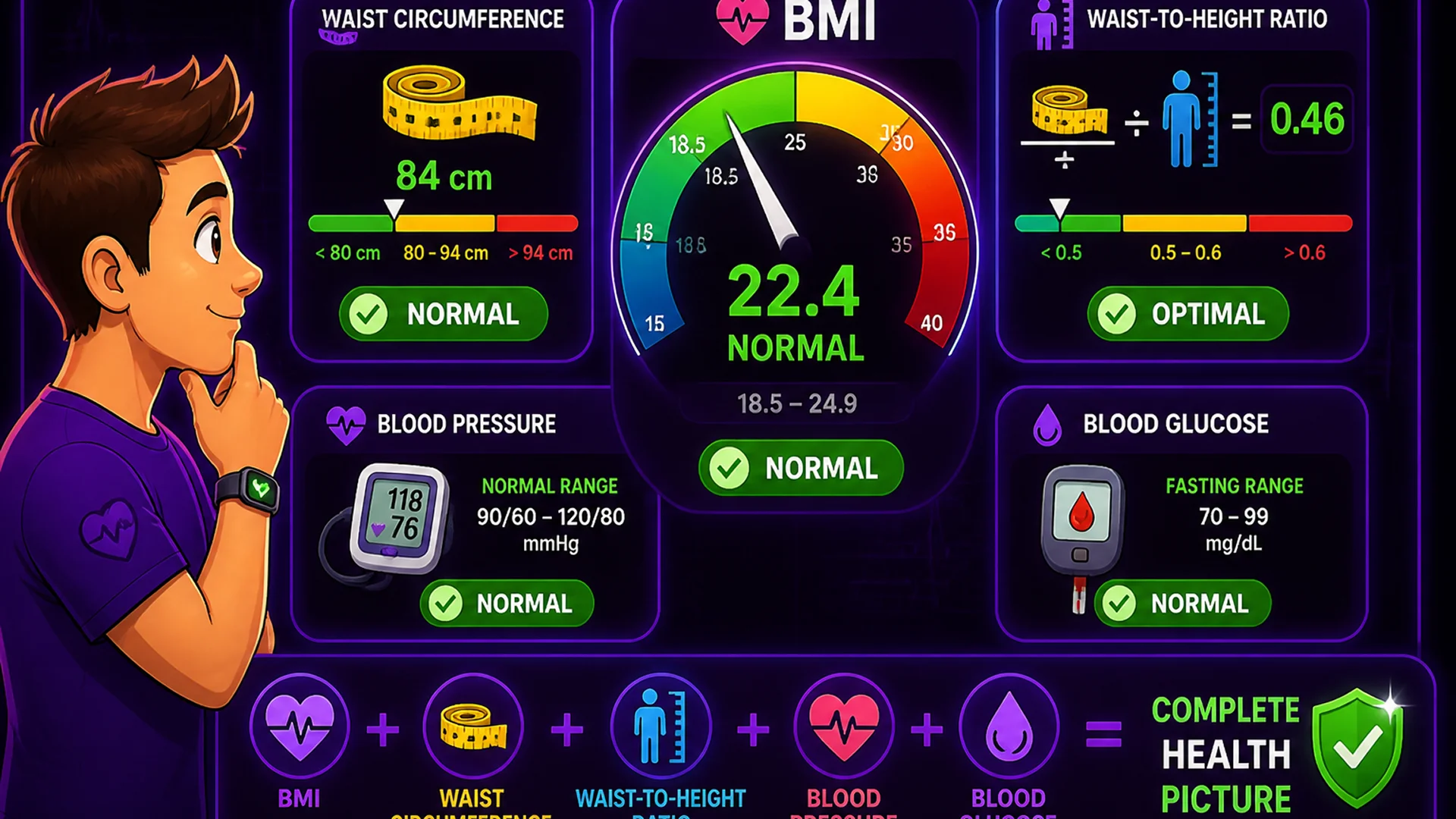
BMI is most useful as a screening tool when combined with other measurements. Waist circumference is a better predictor of cardiovascular and metabolic risk — a waist measurement above 88 cm (35 inches) for women or 102 cm (40 inches) for men indicates increased risk regardless of BMI. Waist-to-height ratio (waist circumference divided by height, both in the same units) should ideally be below 0.5 for good health.
These additional measurements, combined with blood pressure, blood glucose, and cholesterol levels, give a much more complete picture of health risk than BMI alone. The BMI calculator is best used as a starting point — a quick check on whether weight-to-height ratio falls in a healthy range — rather than a comprehensive health assessment.
Related Calculator Tools
Unit Converter — convert between kg and lbs, cm and inches for BMI inputs. VAT Calculator — calculate VAT-inclusive and exclusive prices for any country. Notepad Calculator — perform free-form calculations with notes and history.
Final Thoughts
BMI is a quick, standardized measure of weight status that requires only two inputs: weight and height. While it has important limitations as an individual health metric, it is a useful starting point for understanding whether your weight is in a healthy range and tracking changes over time.
Calculate your BMI now with the BMI Calculator — enter your height and weight and get your result instantly.