A Complete Guide to SEO Tools for Website Owners
Meta tags, sitemaps, robots.txt, and keyword analysis. Learn how to use SEO tools to improve your search engine rankings.
Why Technical SEO Matters for Every Website
Search engine optimization is not just a marketing discipline. If you have a website, blog, or web application, technical SEO determines whether search crawlers can discover, index, and correctly understand your content. Without the right technical foundations in place, even the best-written content can remain invisible to Google and Bing.
Technical SEO covers four critical areas: telling search engines what your pages are about (meta tags), listing which pages exist on your site (sitemaps), controlling crawler access to your content (robots.txt), and ensuring your text uses relevant terms at the right frequency (keyword density). Toolsnests provides a dedicated tool for each of these areas. According to Ahrefs, 90.63% of pages get zero traffic from Google — and a significant portion of those failures are due to missing or incorrectly configured technical SEO, not poor content.

Meta Tag Generator — Control How Search Engines Present Your Pages
Meta tags are the primary communication channel between your page and search engines. The Meta Tag Generator creates optimized title tags, meta descriptions, Open Graph tags for Facebook and LinkedIn previews, and Twitter Card markup — all from a single form that outputs ready-to-paste HTML.
A well-crafted title tag (under 60 characters) and meta description (under 160 characters) are the two most visible elements in a Google search result. They determine whether a searcher clicks your result or the listing below it. Open Graph and Twitter Card tags control how your content appears when shared on social media — without them, platforms guess at what to display, usually with poor results. Use the Meta Tag Generator for every page you want to rank well and share effectively.

XML Sitemap Generator — Help Search Engines Find All Your Pages
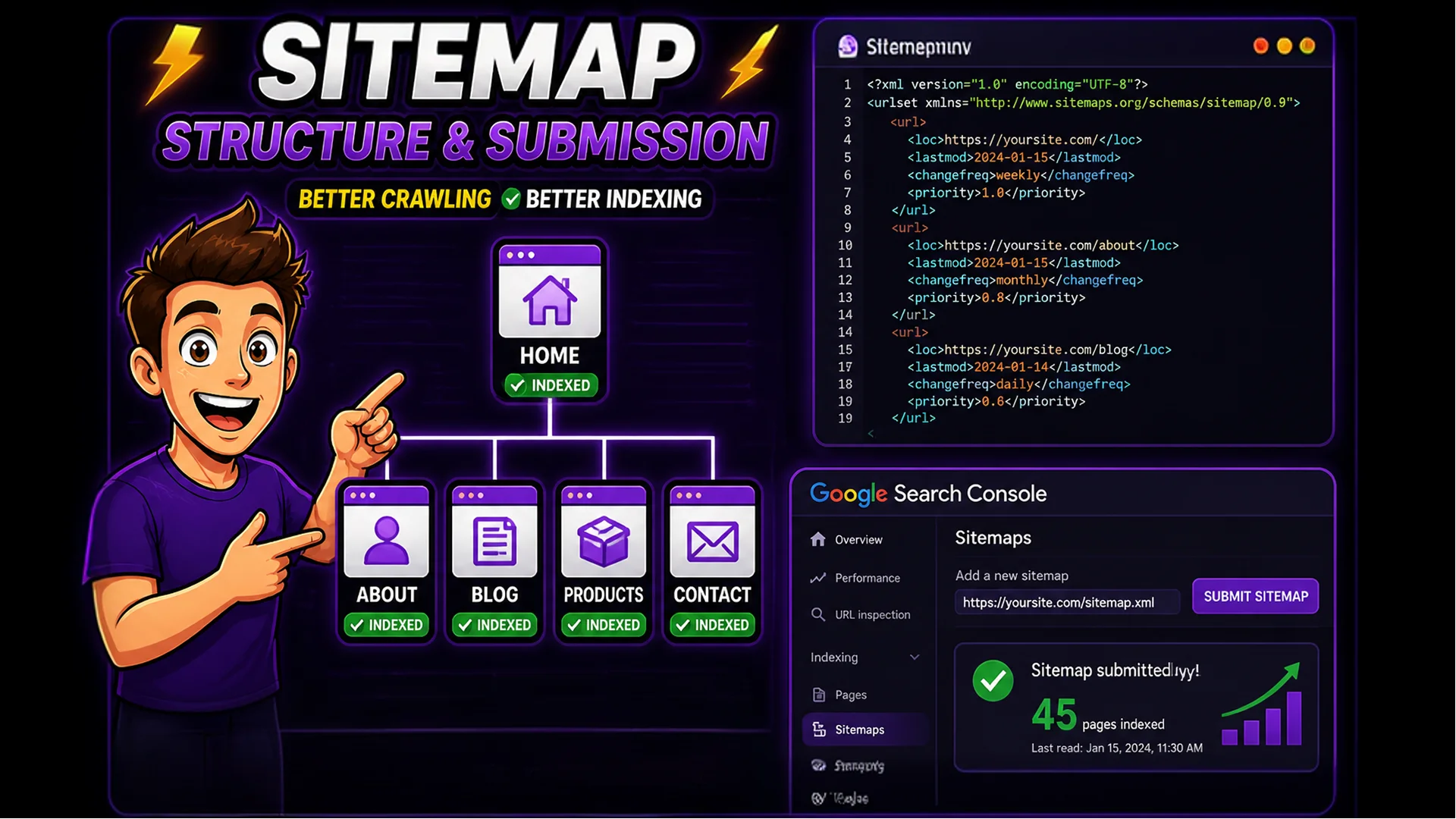
An XML sitemap is a structured file that lists all the pages on your website you want search engines to index. The Sitemap Generator creates a properly formatted sitemap.xml file you can submit directly to Google Search Console and Bing Webmaster Tools.
Enter your URLs, set priority (0.0–1.0) and change frequency for each page (daily, weekly, monthly), and the generator outputs a valid XML sitemap in seconds. Without a sitemap, search crawlers must discover your pages purely by following links. If you have pages with few internal links — new product pages, recent blog posts, deep category archives — they may never be crawled or indexed without a sitemap pointing directly to them. For new websites, a well-structured sitemap can accelerate Google indexing from weeks to days.
Robots.txt Generator — Control Crawler Access to Your Site
The robots.txt file sits at your domain root and tells search crawlers which areas they are allowed to access. The Robots.txt Generator guides you through the most common configurations with a preview before you deploy.
Common use cases: blocking admin panels (/admin/), staging directories, duplicate-content URL patterns (like pagination parameters), and private user areas. You can configure different rules per crawler — allow Googlebot everywhere while restricting others. An incorrectly configured robots.txt is one of the most common SEO disasters. A single misplaced 'Disallow: /' blocks your entire site from all crawlers. The generator's guided interface prevents these mistakes before they happen.

Keyword Density Checker — Optimize Content for Relevance
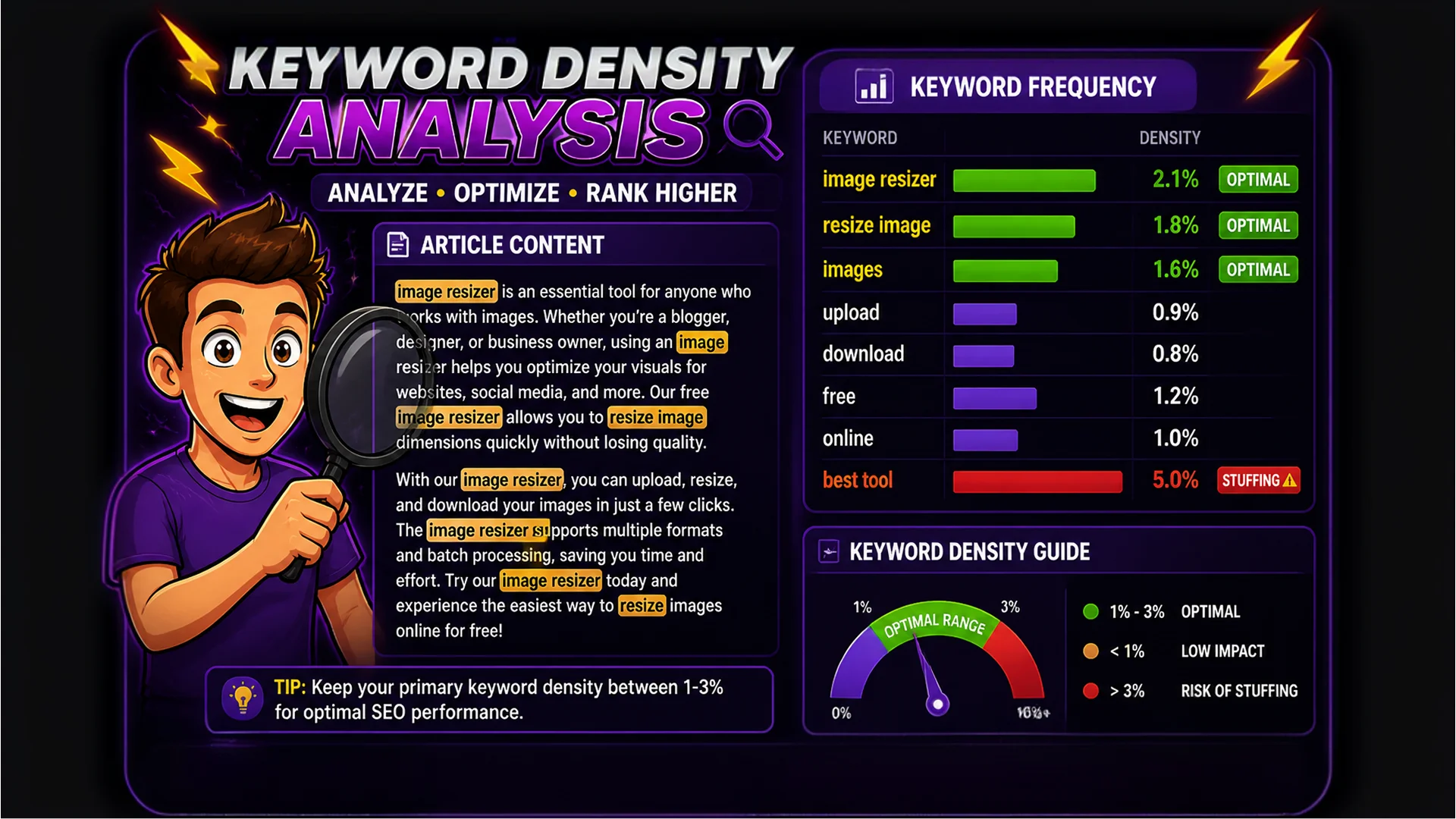
Keyword density is the percentage of times a target word appears relative to total word count. The Keyword Density Checker analyzes your full text and shows word frequency for every term, sorted by count — giving you a complete picture of what your content is actually about.
The optimal range for a primary keyword is 1–3% of total word count. Below 1% and search engines may not recognize the page as highly relevant for that term. Above 3% risks being flagged as keyword stuffing, which can actively hurt rankings. Beyond the primary keyword, the tool reveals secondary terms you use naturally (which can inform your title and meta description), filler words you overuse, and whether your actual word usage reflects the topic you intended to write about.
A Complete SEO Launch Checklist for New Pages
Follow this sequence every time you publish a new page or blog post. Step 1: Use the Meta Tag Generator to create your title tag (under 60 characters, include primary keyword), meta description (under 160 characters, includes keyword, written to encourage clicks), and Open Graph/Twitter Card tags. Step 2: Add the page URL to your sitemap using the Sitemap Generator, then resubmit the updated sitemap.xml to Google Search Console. Step 3: Paste your page content into the Keyword Density Checker to verify your target keyword appears at 1–3% density. Step 4: Review your robots.txt with the Robots.txt Generator to confirm the new page section is not accidentally blocked from crawlers.
This four-step checklist takes under 10 minutes per page and covers the full technical SEO foundation. It will not by itself guarantee top rankings — that requires quality content and backlinks — but it ensures search engines can discover, access, understand, and index your content correctly.

Common Technical SEO Mistakes to Avoid
Missing or duplicate title tags — every page needs a unique, descriptive title under 60 characters. Meta descriptions exceeding 160 characters — Google truncates them in results, making them less compelling to searchers. Creating a sitemap but never submitting it to Google Search Console — Google may take weeks to find it organically. An overly permissive robots.txt that accidentally blocks important pages from being crawled. Missing Open Graph tags — when your pages are shared on LinkedIn, Facebook, or Twitter, the preview looks broken without them.
Each of these mistakes is easy to make and straightforward to fix once identified. The Toolsnests SEO tools surface these issues immediately — no browser extension, no subscription, no site audit tool required.
Related SEO Tools
Meta Tag Generator — create title tags, meta descriptions, and social sharing tags. Sitemap Generator — build XML sitemaps for Google Search Console. Robots.txt Generator — configure crawler access rules correctly. Keyword Density Checker — analyze keyword frequency across your full content.
Final Thoughts
Technical SEO is not optional if you want your content to be found. These four tools — meta tags, sitemaps, robots.txt, and keyword density — cover the foundational layer that every website needs before content-based or link-based SEO efforts can succeed.
Start with the Meta Tag Generator for your most important pages and work through the launch checklist above. You will have a complete technical SEO foundation in under an hour, free, without installing anything.